🔧 Hardware Evolution: From HW3 to AI5
Tesla's journey from the first dedicated Autopilot chip to the revolutionary AI5 – a quantum leap in just 7 years
HW3 Era
- First dedicated Autopilot hardware designed by Tesla
- 8× 1,2 MP-Kameras (1280×960 px)
- 21 Watt TDP – extremely energy efficient
- FSD "Lite" – Supervised mode only
- No redundancy
🏛️ Hesse Relevance
Over 15,000 Teslas with HW3 are already driving on Hesse's roads.
HW4 Revolution
- 3.5× more computing power than HW3
- 12× 5 MP cameras + low-light sensors
- Dual redundancy for critical systems
- Supervised + Unsupervised capable
- First tests in Austin, TX successful
🏛️ Hessen-Relevanz
All new Model 3/Y since 2023 have HW4 – thousands of vehicles are "Robotaxi-ready"!
AI5 – The Beast
- 10× more performance than HW4
- Triple redundancy + backup system
- Purpose-built for Cybercab & Robovan
- Level 4/5 autonomy ready
- Power consumption: Only 40W
🏛️ Hessen-Relevanz
AI5 will power the Cybercab – Hesse could become the first European deployment location!
📊 Hardware Comparison
| Specification | HW3 | HW4 | AI5 |
|---|---|---|---|
| Computing Power | 144 TOPS | ~500 TOPS | ~5.000 TOPS |
| Cameras | 8× 1,2 MP | 12× 5 MP | 12× 8 MP + IR |
| Redundancy | None | Dual | Triple + Backup |
| FSD Mode | Supervised | Supervised + Unsupervised | Full Autonomy |
| Power Consumption | 21W | 35W | 40W |
🎬 FSD in Action – Versions 14/13/12
Real drives, real roads, real AI (as of: December 2025)

Click to play (GDPR-compliant)
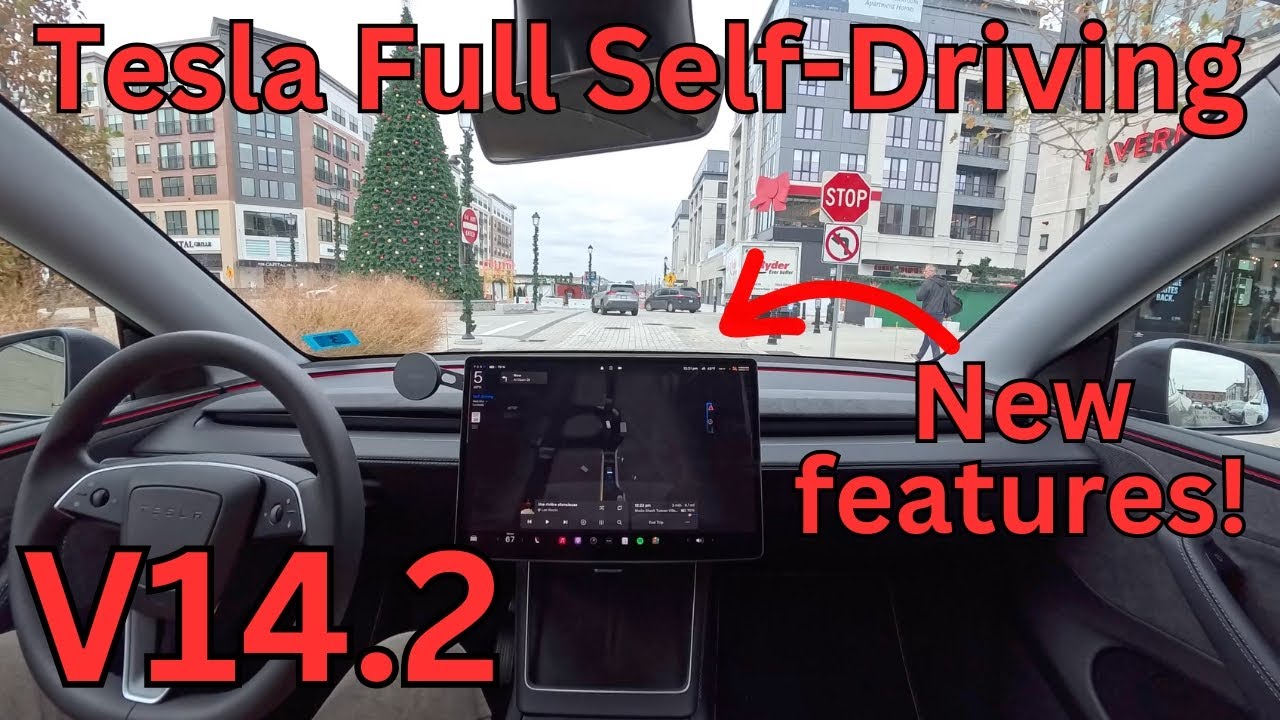
FSD v14.1 in Germany – construction zones, cyclists, rush hour
→ EFIEBER Channel
Click to play
Sawyer Merritt – first drive with the latest version

Click to play
Click to play

Click to play
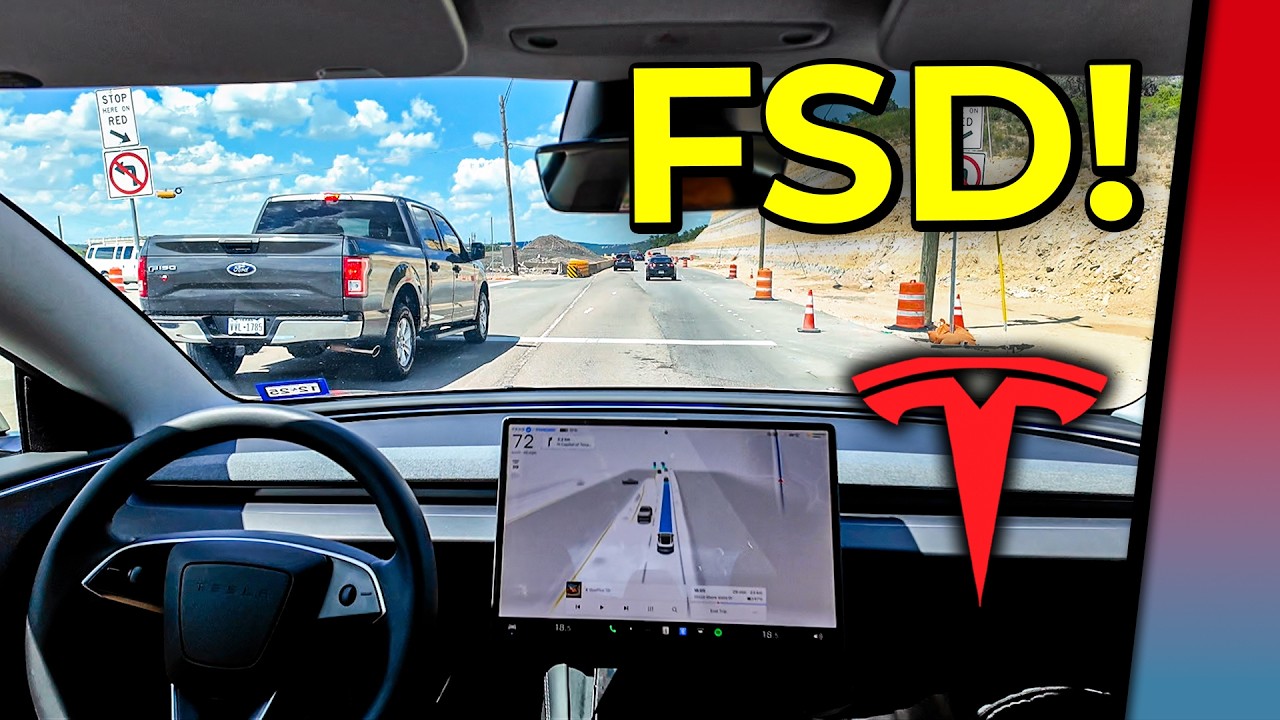
What older hardware can still do – anticipation for v14 lite
🚗 FSD v14 – 5 Drive Profiles
Choose your driving style – click a profile for details!
Sloth
For beginners – not one km/h too fast
• Always drives below the speed limit
• Never overtakes
• Extreme safety distance
In Frankfurt: Stress-free along the Main riverbank 🌳
Chill
Relaxed through the city
• Drives at or slightly below speed limit
• Only overtakes when clearly safe
• Comfortable acceleration
In Wiesbaden: Gently through the spa city 🏛️
Normal ⭐
Perfectly balanced – the default
• Drives exactly at speed limit
• Overtakes slow vehicles
• Natural traffic flow
In Hesse: Ideal for A661, A5 and city driving 🛣️
Hurry
Brisk driving – save time
• Drives at speed limit + 5-10%
• Active overtaking
• Faster acceleration
To the airport: Gate closing soon? Hurry! ✈️
Mad Max
Drives like a local in a rush
• Maximum legal speed
• Aggressive but legal overtaking
• Sporty driving
⚠️ Still safe and rule-compliant!
On the A5: Frankfurt → Kassel like a true Hessian 🏎️
⏱️ Travel Time Comparison: Frankfurt Römer → Airport (18 km)
🧠 How Does FSD Work?
Unlike rule-based systems ("If obstacle, then brake"), FSD is based on a neural network – an AI architecture modeled after the human brain.
Training with Data
The network learns from billions of kilometers of real driving data. Every Tesla collects (anonymized) edge cases.
→ In Hesse: Every drive through Frankfurt's construction zones makes FSD better.
End-to-End Learning
In FSD v14, the system is 100% neural network – from camera images to steering/throttle/brake commands.
→ Advantage: No more manually programmed rules.
OTA Updates
Tesla can update the network weekly – over-the-air, no dealership needed.
→ Comparison: Competitors need months for updates.
👁️ What FSD "Sees" – Example: Konstablerwache Frankfurt
Input (in 27ms): 8 pedestrians, 2 cyclists, delivery van, traffic light yellow→red, tram
Output: Gentle braking (0.3g), steering -2°
A human needs 2-3 seconds – FSD does this 36× per second.
🏆 Tesla's Competitive Lead
In 2025, Tesla leads with at least a generation ahead of Waymo, Cruise, or Baidu.
Data Volume
Tesla: 15+ billion kilometers
Waymo: ~100 million
→ Tesla has 150× more data
Custom Chips
Tesla designs its own chips – no dependency on Nvidia.
AI5: ~$500 vs. $5,000+ from competitors.
Update Frequency
Tesla: Weekly updates via OTA
Waymo: Updates every 2-3 months
Traditional OEMs: 1-2× per year
Scalability
Vision-only: No LiDAR, no HD maps.
→ FSD works everywhere – Frankfurt or Tokyo.
📊 Tesla vs. Competitors
| Criterion | Tesla FSD | Waymo | Cruise |
|---|---|---|---|
| Sensors | Cameras only (~$500) | LiDAR (~$75,000) | LiDAR (~$50,000) |
| Coverage | Global | ~20 US cities | Paused |
| Fleet | 7+ Millionen | ~1,000 | ~500 |
| Data/Year | ~3 bn km | ~20 m km | ~10 m km |
| Cost/Ride | ~$0,30/km | ~$1,00/km | ~$1,20/km |
"Tesla's autonomous driving business alone could be worth $7 trillion by 2030."
— Cathie Wood, CEO Ark Invest
⚠️ Edge Cases: Where FSD Shines
Edge cases are rare, difficult situations. This is where FSD's true strength shows.
Construction Zone Chaos
Situation: Confusing markings, temporary traffic lights
FSD: Recognizes construction signs, follows temporary lines
📍 Frankfurt: A661/A3 permanent construction zone mastered
Aggressive Cyclists
Situation: Cyclist cuts in, runs a red light
FSD: Detects cyclists up to 200m, calculates trajectory
📍 Frankfurt: Main riverbank with heavy cycling traffic
Bad Weather
Situation: Heavy rain, snow, fog
FSD: HW4 low-light cameras, 5MP resolution
📍 Taunus: Foggy mountain roads – no problem
Emergency Vehicles
Situation: Blue lights from behind, rescue corridor
FSD: Detects blue lights + sirens, pulls to the right
📍 Germany: Rescue corridor ("Rettungsgasse") formed correctly
Trams / Streetcars
Situation: Shared lanes, right-of-way, stops
FSD: Recognizes tracks, calculates tram trajectory
📍 Frankfurt: Tram intersections in Sachsenhausen
Tall Vehicles
Situation: Buses blocking traffic lights, signs
FSD: Temporal Memory – remembers traffic light position
📍 Wiesbaden: ESWE buses – no problem
⚡ FSD Saves Energy – and Earns Money
Less Consumption Through AI
FSD drives more anticipatively than any human:
✅ Coasts early approaching red lights
✅ Optimizes speed for minimum consumption
✅ Uses momentum intelligently
✅ Avoids unnecessary acceleration
Example Frankfurt Commuter:
40 km daily → ~500 kWh/year saved → ~€150
Your Tesla Earns at Night
The Concept: When your Tesla charges at night, its unused computing power can be utilized for x.ai's AI network.
🌐 Millions of Teslas = global supercomputer
💵 x.ai pays for the compute time
🔌 Passive income without extra hardware
📲 All via software update
🤯 Daytime Robotaxi = active income
Nighttime x.ai = passive income
🚕 Your First Robotaxi Ride
Saturday evening, 9:30 PM in Frankfurt. From Römer to the airport – this is how easy it is:
Open the App
• Start: Römer, Frankfurt
• Destination: Airport Terminal 1
• Cost: €8.50 (instead of €35-45 by taxi)
• Travel time: 18 minutes
Vehicle Arrives
• AI selects the nearest available Cybercab
• Wait time: 4 minutes
• Live tracking in the app
• License plate: F-RX 4217
Set Your Comfort
• Temperature: Preheat to 22°C ✓
• Seat heating: Level 2 ✓
• Music: Connect Spotify ✓
• Push notification when cab arrives
Get In
• Bluetooth detects you → doors open
• Interior perfectly tempered
• Display: "Welcome! Please fasten your seatbelt."
• Ride starts automatically
Relaxed Ride
• FSD drives smoothly – no jerking
• Netflix on the display
• Or work on your laptop (5G)
• No small talk needed 😌
Arrival
• 9:52 PM: Terminal 1 reached
• Doors open automatically
• Charge: €8.50 billed automatically
• Cab drives to the next customer
🤖 The Fleet System – Perfection Behind the Scenes
🧠 Real-Time Optimization
All Robotaxis centrally coordinated. AI proactively dispatches cabs to where demand is emerging.
⚡ Only 5% Dead Miles
Traditional taxi: ~40% dead miles
Robotaxi: <5% – perfect ride chains
🔋 12 kWh/100 km
= ~€1.20 electricity cost per 100 km
At night: Charging + x.ai jobs
Hesse can become one of the first locations in Europe.
Let's push for it together!